Serum for Dark Spots and Uneven Skin Tone: Ingredients and Use Guide
Livyra Blossom Team · 1 September 2026
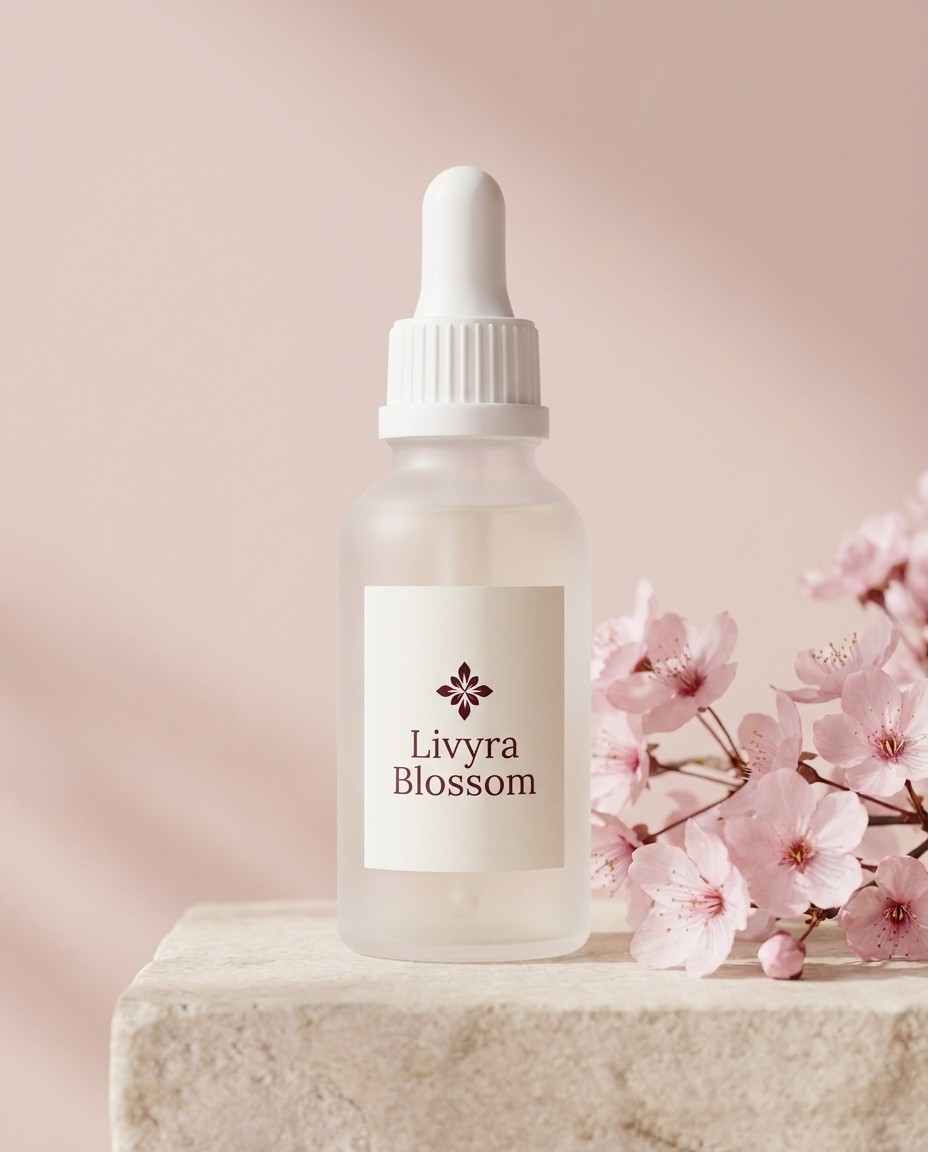
Dark spots and uneven-looking skin tone are among the most common reasons people reach for a targeted serum. They can follow sun exposure, the marks left after a blemish clears, or simply areas that look less even than the rest of the face.
A serum is only one part of the picture. Choosing one well means looking past the label and weighing a few practical things: a clear purpose, a carefully developed formula, suitable active ingredients, consistent use, and daily sun protection. This guide walks through each of those, and where Livyra Blossom’s serum fits.
What Are Dark Spots and Uneven Skin Tone?
Dark spots — often called hyperpigmentation — are areas where the skin looks darker than the surrounding tone. Uneven skin tone is the broader impression that the complexion is not uniform: patches, dullness, or marks that draw the eye.
Different causes can call for different approaches, and this article is educational rather than a diagnosis. Pigmentation that appears suddenly, keeps spreading, or otherwise concerns you is worth having assessed by a dermatologist, who can identify what is actually driving it.
Does Brightening Mean Changing Your Natural Skin Tone?
It helps to be precise about what “brightening” means in cosmetics. The goal is not to change your natural skin color. It is to improve radiance and reduce the appearance of uneven tone and dark spots, so the complexion looks clearer and more even.
This is why careful skincare talks about the appearance of a more even tone rather than “whitening.” A well-formulated serum works with your skin — supporting radiance and helping visible marks look softer — not against your natural identity.
How to Choose a Serum for Dark Spots
A simple, honest checklist beats marketing claims. When you compare options, work through these:
- Define what you want the serum to do — even tone, softer-looking spots, more radiance.
- Understand the active ingredients in the formula and the role each one plays.
- Prefer a formula that is registered and tested.
- Choose a texture that fits comfortably into your daily routine.
- Check that it suits your skin type.
- Commit to the usage instructions and to daily sun protection.
No serum is objectively “the best” for everyone. What matters is how well a formula meets criteria like these. On that basis, the Livyra Blossom serum pairs a defined pigmentation-care purpose with a registered, tested formula and a lightweight texture built for daily use.
The Key Ingredients in Livyra Blossom Serum
The serum combines three complementary actives. Here is what each is generally understood to contribute — described at the level of ingredient research, not as a promise about any one person’s result.
| Ingredient | |
|---|---|
| Niacinamide | A form of vitamin B3 widely used in skincare. It is associated with supporting the appearance of a more even tone, adding radiance, and helping the skin’s natural barrier. |
| Alpha-Arbutin | A well-known ingredient in pigmentation-focused skincare, used to help reduce the appearance of dark spots and uneven tone for a clearer-looking complexion. |
| Tranexamic Acid | A specialized ingredient that has been studied in pigmentation-focused formulations and is included to support a more even-looking complexion. |
Two things are worth separating clearly: general ingredient evidence and testing of a finished product. Studies on niacinamide with tranexamic acid or on alpha-arbutin describe those ingredients — they are not proof that any specific formula will produce identical results. You can also see how these actives sit together on the serum’s Key Ingredients section.
Why Combine These Three Ingredients?
Each active leans toward a different job, and together they cover more of the picture than any one alone. Rather than layering several overlapping serums, a single focused formula keeps a routine simple.
- Niacinamide — supporting radiance and the skin barrier.
- Alpha-Arbutin — targeting the appearance of dark spots.
- Tranexamic Acid — supporting a more even-looking tone.
- One serum with a clear purpose, instead of several that duplicate each other.
Ingredient concentrations are part of a product’s own formulation and testing, so this guide does not invent percentages. What it describes is the complementary intent behind combining the three.
What Makes Livyra Blossom Serum Different?
Beyond the actives, a few documented facts describe the Livyra Blossom serum specifically:
- An advanced skincare formula.
- Registered and tested to verify safety and efficacy.
- Helps reduce the appearance of pigmentation and dark spots.
- Helps improve the appearance of uneven skin tone.
- Designed for fast, visible results with regular use according to the directions.
- A lightweight, fast-absorbing texture.
- Suitable for sensitive skin according to testing.
- Suitable for different skin types.
- A 30 ml size for intensive care.
- Made in the Kingdom of Saudi Arabia.
You can read more about the thinking behind the formula on the Livyra Blossom scientific story.
How to Use a Dark Spot Serum in Your Routine
After cleansing and drying the skin, apply an appropriate amount of serum to the face and massage gently until absorbed. Use it according to the directions on the packaging, and when using it in the morning, follow with a suitable sunscreen.
More product does not mean faster results. A consistent, modest amount used regularly is what a pigmentation-focused routine is built on. The full usage guidance is on the product page.
Why Sunscreen Matters
Sun exposure is one of the main reasons existing dark spots become more noticeable. Broad-spectrum sun protection is what helps keep them from deepening while the rest of your routine works.
A common, sensible recommendation is a broad-spectrum sunscreen of SPF 30 or higher, reapplied as directed — but follow your sunscreen’s own label and your dermatologist’s advice. The American Academy of Dermatology offers helpful general guidance here. The serum itself is a skincare step; it does not provide sun protection.
Common Mistakes When Using a Pigmentation-Focused Serum
- Using it only occasionally instead of consistently.
- Applying more than the instructions suggest.
- Combining many actives at once without checking they suit you.
- Skipping daily sunscreen.
- Expecting your natural skin color to change.
- Continuing despite clear irritation.
- Expecting identical results for everyone.
Is It Suitable for Sensitive Skin?
The Livyra Blossom serum is suitable for sensitive skin according to its product testing. As with any new product, a little care when you introduce it goes a long way:
- Patch test a small area first when introducing a new product.
- Follow the instructions on the packaging.
- Stop use and seek professional advice if significant irritation occurs.
When Should You See a Dermatologist?
Skincare has limits, and some situations are better assessed in person. Consider professional advice for:
- Sudden changes in pigmentation.
- Patches that persist or keep worsening.
- Significant or lasting irritation.
- Suspected melasma or another skin condition.
- Pregnancy, breastfeeding, current medications, or an existing dermatological condition, where professional advice may be appropriate.
Frequently Asked Questions
- Does a dark spot serum change your natural skin color?
- No. The aim is to improve radiance and the appearance of an even tone and softer-looking dark spots — not to change your natural skin color.
- Is the Livyra Blossom serum suitable for sensitive skin?
- It is suitable for sensitive skin according to product testing. Patch testing when you first introduce it is still a sensible habit.
- Can the serum be used in the morning?
- Yes. Use it according to the directions on the packaging, and when using it in the morning, follow with a suitable sunscreen.
- Does the serum replace sunscreen?
- No. The serum is a skincare step and does not provide sun protection. Daily broad-spectrum sunscreen remains important.
- When will I see results?
- Results vary from person to person and depend on regular use, your skin’s condition, your overall routine, and following the instructions. Consistency matters more than any single application.
Scientific References
This article is for general education only and is not a substitute for individualized medical advice, diagnosis, or treatment. Research on individual ingredients or other formulations does not prove that any specific product will produce the same results for you.
Specialized care starts with a considered formula
Livyra Blossom serum combines Niacinamide, Alpha-Arbutin, and Tranexamic Acid in a registered and tested skincare formula, developed to care for dark spots and uneven skin tone.